Before the Coronado Shores, There Was Tent City
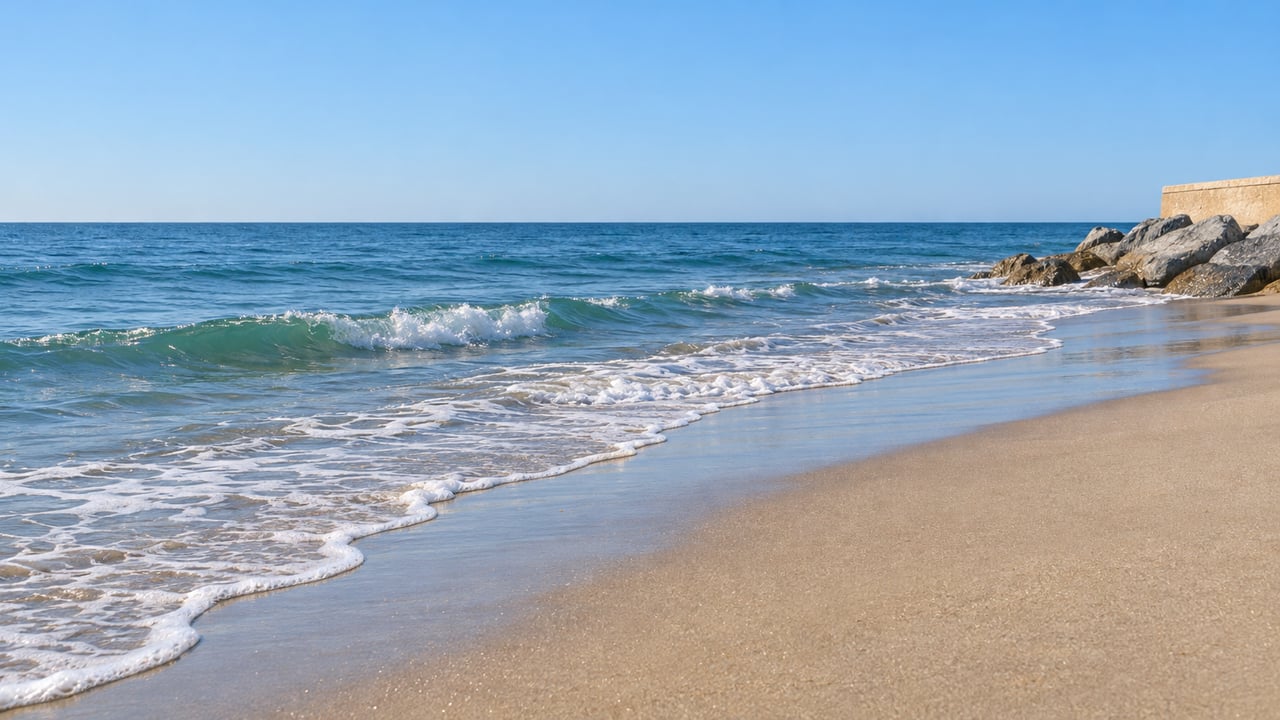
For four decades, the strip of beach where the Coronado Shores towers stand now was covered in canvas. Hundreds of tents lined the sand between the Hotel del Coronado and the Silver Strand. A rail line ran right through the grounds and carried visitors between San Diego and Coronado, years before the ferry and the bridge took over that job. The Coronado Historical Association's timeline dates Tent City to 1900 through 1939 and places it south of the hotel, under John D. Spreckels.
The ten towers on Avenida del Mundo went up on that same ground between 1970 and 1978. Most of what happened there in between can still be traced from the beach or looked up in a public archive, from the end of the tents to the island's split reaction to the buildings that replaced them.
What ended Tent City was a road. The City of Coronado's 2025 historic context statement says 1940 was the first summer the resort did not open. By then the highway had been rerouted through its grounds and the railroad tracks moved closer to the bay. That road became State Route 75.
The resort survives in the archive. A search for "Tent City" in the Coronado Historical Association's online catalog returns 525 records. One of them is a photograph of the Strand after Tent City was demolished in August 1940. Anyone who lives in one of the towers now can pull up an image of the beach below their balcony as it looked between the tents and the towers.
The land stayed quiet for almost three decades. Then the Coronado Bridge opened in 1969, and the island changed quickly. The City's historic context ties the bridge era to new growth, high-rise construction and the loss of historic buildings, and it reports that home costs rose 34% within a year of the bridge opening.
That June, the J.H. Snyder Company of Westwood and New York's Loews Theaters formed a joint venture. A 2011 USC historic preservation thesis by Sian Winship reports that the partners bought 35 acres on the Silver Strand and invested $75 million in the project. The design went to the firm of William Krisel and Abraham Shapiro, and M.H. Golden Company was the contractor.
Before any tower rose, a seawall went in. The City's account describes the wall as the border between the construction site and the ocean. The Coronado Historical Association records it as a large boulder wall along the beach boardwalk, 3,100 feet long and built for $325,000.
Construction on Cabrillo, the first tower, began in 1970. It opened in June 1971 at 15 stories. The City's historic context says the towers' height and location blocked Coronado's once-open skyline and moved residents to push for keeping future development below three stories and 40 feet.
That push reached the ballot in a June 1972 special municipal election. The City of Coronado's election compendium records 3,863 ballots cast out of 7,030 registered voters. Proposition R, a three-story or 40-foot height limit, passed 3,508 to 1,542. Proposition S asked whether the Coronado Shores should be excluded from it, and it passed 2,577 to 2,416, a margin of 161 votes. Those two counts are the clearest record of how the island felt about its new neighbors in 1972. Voters backed the height question by more than two to one and split almost evenly on the towers already under way.
The split vote had no visible effect on demand. Winship's thesis reports that units in the first two towers were priced from $33,000 to $98,900 and sold out within two years of groundbreaking. By 1973, after the fourth tower went up, the Shores were beating earlier condominium sales records, according to the Coronado Historical Association.
The remaining towers followed over the next seven years, and the City's history places the last completion in early 1978. That last tower was La Princesa. The Historical Association records that every one of its units sold out in two hours, through a lottery. Over the years the buildings have been home to popcorn maker Orville Redenbacher, novelist Joseph Wambaugh and baseball's Joe Garagiola.
Most of this history is still visible from the beach. The boulder seawall still lines the sand from North Beach, past the Hotel del Coronado and in front of the Shores, and the Historical Association's account of the seawall describes it as still protecting the shoreline and boardwalk. Tent City's road is now State Route 75. The 1972 vote counts are printed on page 7 of the City's election compendium.
The towers are also reaching anniversaries of their own. Cabrillo turned 55 in June 2026, counting from its June 1971 opening. La Princesa, the tower that sold out in an afternoon, turns 50 in 2028. When the Historical Association wrote its history of the Shores in June 2020, it called the ten buildings "a notable fixture in Coronado's unique skyline," with views over Coronado, San Diego Bay, downtown, Point Loma and the Pacific. More on the towers as they stand today is on our Coronado Shores neighborhood page.
At Flagship Properties, we keep Coronado's history in mind because it is part of what a home here is worth. If you own in one of the ten towers and want to talk about where your building fits in this story, or what its history means for a future sale, we would welcome a private consultation.
Stay up to date on the latest real estate trends.

You’ve got questions and we can’t wait to answer them.