In Coronado Cays, the Dock Sets the Price Before the Square Footage Does
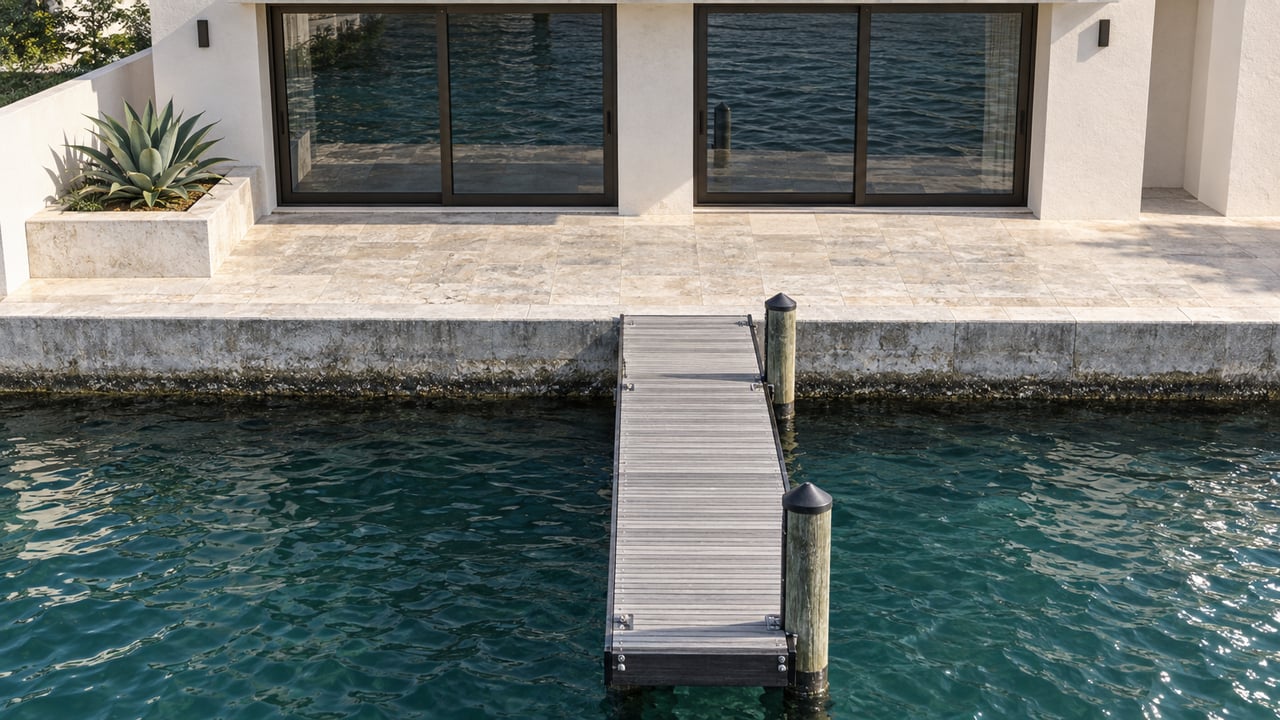
On September 15, a five bedroom home on Green Turtle Rd closed escrow in the Cays for $5.75 million, just over 5,800 square feet. That same week, a four bedroom a few doors down at 25 The Point, still active in the same village, was asking $5.499 million with barely half that footprint at 3,316 square feet. Run the math and the smaller home is asking nearly 70 percent more per square foot than the one that just sold. Two houses, one gated community, one street name in common, and a gap in value that has nothing to do with bedrooms or bathrooms.
That gap is the story. Anyone shopping Coronado Cays by the published median is shopping the wrong number, because that median is an average of two products that happen to share a mailing address: dock-front estates built around boat access, and interior condos and townhomes built around the pool and the gate. The blend hides more than it reveals.
As of the most recent MLS snapshot from mid-September 2026, Coronado Cays carried 61 active listings with a median list price of roughly $2.1 million and an average price of $1,164.92 per square foot. A few days earlier, a separate pull of 63 listings put the average sale price closer to $1.89 million. Both numbers are accurate. Both describe the same three-week window. Neither describes a typical Cays home, because there is no typical Cays home.
Compare that blended figure to Coronado overall. Over the three months ending in May 2026, the citywide median sale price across all of Coronado was $3.0 million, up 9.1 percent year over year. On paper, that makes the Cays look like the discount option inside city limits. In practice, it means the citywide number is being pulled upward by Village and Shores estates, while the Cays median is being pulled downward by a meaningful share of condos and townhomes in villages like Antigua Court that never touch a private dock at all. A buyer anchoring their budget to either number alone will misjudge what a serious waterfront property here actually costs, and misjudge it in opposite directions depending on which number they picked.
Look at three listings from the same September window, all inside the Cays gates.
| Address | Village | Beds / Baths | Square Feet | Price | Price per Sq Ft |
|---|---|---|---|---|---|
| 3 Green Turtle Rd | Green Turtle Village | 5 bd / 5.5 ba | 5,812 | $5,750,000 (sold 9/15/26) | ~$989 |
| 25 The Point | Green Turtle Village | 4 bd / 4.5 ba | 3,316 | $5,499,000 (listed) | ~$1,658 |
| 8 Antigua Ct | Antigua Village | 3 bd / 2 ba | 1,729 | $1,775,000 (listed) | ~$1,027 |
The Antigua Court condo and the larger Green Turtle Rd house land within about four percent of each other on a price-per-square-foot basis, despite one being an interior townhome and the other a five bedroom waterfront estate. The outlier is 25 The Point, priced at a level that would look unremarkable in a coastal city like La Jolla but stands apart from everything else currently listed inside the Cays gates.
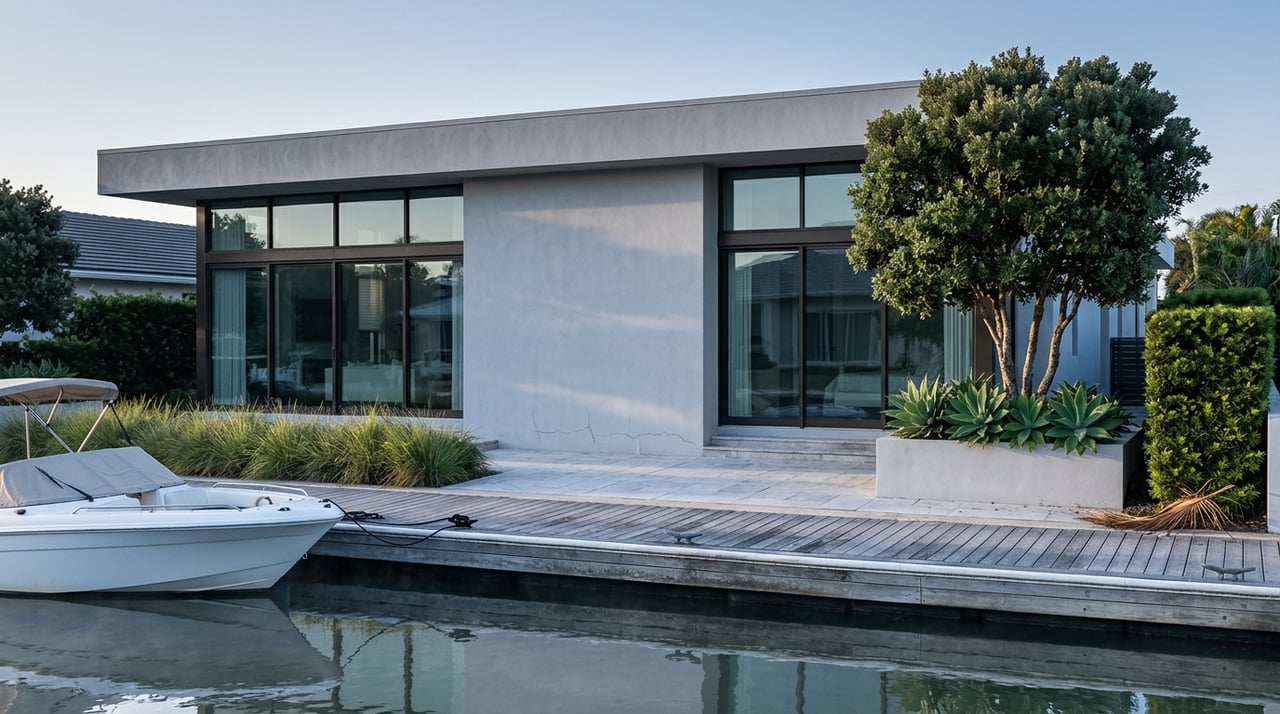
The difference isn't finish level or age. It's the water relationship. Local listing data on the Cays consistently ties value to dock configuration, channel width, and orientation, not to the size of the house sitting behind the dock. A private T-head dock that can hold a 55-foot vessel with a clear run to open water is a different asset than a slip shared through the HOA marina, even when the houses attached to each are otherwise comparable. Two homes in the same village, built in the same era, can carry a six-figure gap per linear foot of frontage because one dock clears the bridge height at low tide and the other doesn't.
That is the piece the aggregate average erases. $1,164.92 per square foot sounds like a going rate. It's really a blend of a roughly $1,000 tier, driven by interior product and shared marina access, and a roughly $1,650 tier, driven by direct, unobstructed, private dock frontage. A buyer who anchors to the average and then falls in love with a listing at either extreme is going to feel like the market moved on them overnight. It didn't move. They were just looking at the wrong end of the range.
Price per square foot explains what a Cays property costs. It doesn't explain what living there is like day to day, and that's where a second, quieter data point matters.
Public housing data compiled by NeighborhoodScout puts the Cays vacancy rate at 24.3 percent, with roughly 17 percent of homes classified as seasonally occupied. Both figures sit well above what you'd find in a typical California neighborhood built for full-time residents. Read together with the age of the housing stock, almost entirely built between 1970 and 1999, the picture is a community where a real share of the inventory functions less like a subdivision and more like a marina-adjacent second home enclave.
That has practical weight for two different kinds of buyers. Someone shopping for a primary residence, expecting the same daily rhythm of neighbors coming and going that you'd find a few miles north in the Village, should know that a meaningful slice of Cays homes sit empty for stretches of the year. Someone shopping as an investor or a part-time owner, by contrast, is shopping in a neighborhood already built around that pattern, where the HOA structures that govern docks, common marinas, and rental activity exist precisely because so much of the community isn't occupied full time. The Cays isn't a compromise version of Coronado for buyers who couldn't get into the Village. It's a different product built for a different use case, and the vacancy data is the evidence.
None of this means the published median or average is wrong. It means it's answering a question most buyers aren't actually asking. "What does Coronado Cays cost" isn't one question. It's at least three: what does an interior condo cost, what does a shared-slip waterfront home cost, and what does a private, deep-water dock estate cost. Each has its own price band, and each moves somewhat independently of the others depending on what's listed in a given month.
For a buyer working with Flagship Properties, the useful exercise isn't pulling the Cays median off a portal and comparing it to Village or Shores pricing. It's identifying which of the three products you're actually shopping for, then pricing that specific tier against its own recent comparables, dock configuration included. A design or build background helps here too. A dock that clears at low tide, a channel wide enough for a beam over 16 feet, an orientation that doesn't require backing a boat around a blind corner: these are the details that separate a listing that will hold its value from one that will sit at 83 days on market waiting for the right specific buyer to find it.
If you're comparing the Cays to Coronado Village or the Shores and want help translating a median price into what it actually buys on a specific street, Flagship Properties can walk through current comparables by village and by dock type before you write an offer.
This article is general information, not legal, tax or financial advice. Consult a qualified professional about your situation.
Stay up to date on the latest real estate trends.

You’ve got questions and we can’t wait to answer them.